

14 Jul The Ultimate Guide to Nautical Knots: Types, Uses, and Step-by-Step Instructions
Whether you are a sailing enthusiast or preparing for your RYA (Royal Yachting Association) or equivalent skipper certification, safety at sea is the absolute priority. In the nautical world, a secure knot is the difference between a smooth docking and an emergency situation.
While there are hundreds of different types of knots, in your day-to-day sailing, you only need to master a select group. In this comprehensive guide, we explore the essential sailing knots you need to know to dock, secure fenders, take tension off a line, or perform safe maneuvers. If you are thinking about setting sail along the coast, this guide is for you.
Why is Mastering Marine Knots Essential?
Marine knots occupy a significant part of any sailing curriculum for a good reason: they are useful, necessary, and potentially life-saving. A well-executed knot must fulfill the sailor’s golden rule: it must be extremely strong when under tension, yet remain easy to untie once that pressure is released. Below, we review the most common types of marine knots used by experienced skippers.
The 6 Essential Sailing Knots Every Sailor Must Know
If you are just starting, mastering these basic sailing knots will solve almost any problem on deck.
1. Simple Knot (Overhand Knot)
The most elementary of all knots. It is the first one everyone learns.
- Usage: It acts as a temporary stopper to prevent a rope from fraying or slipping through a pulley.
- Note: If subjected to high tension for a long period, it can become very difficult to untie.
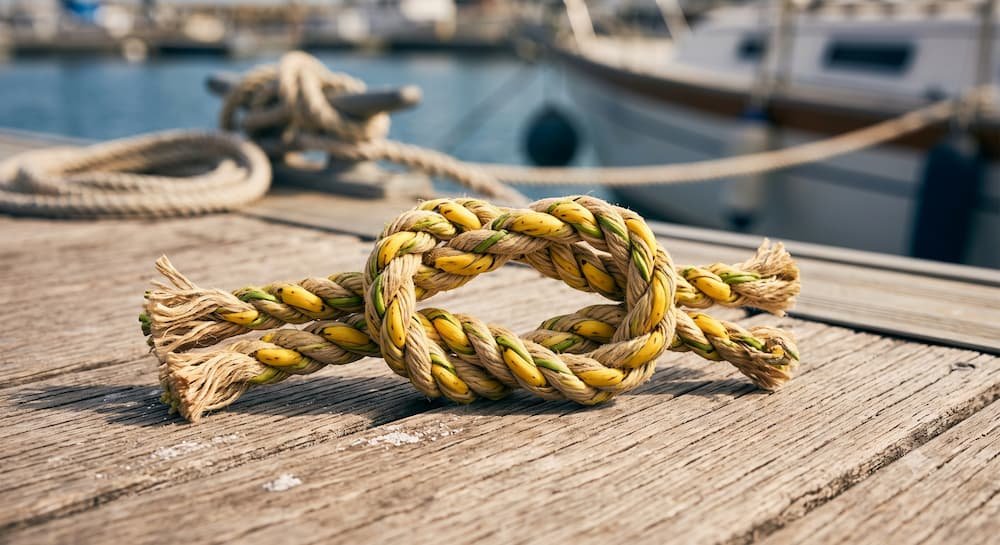
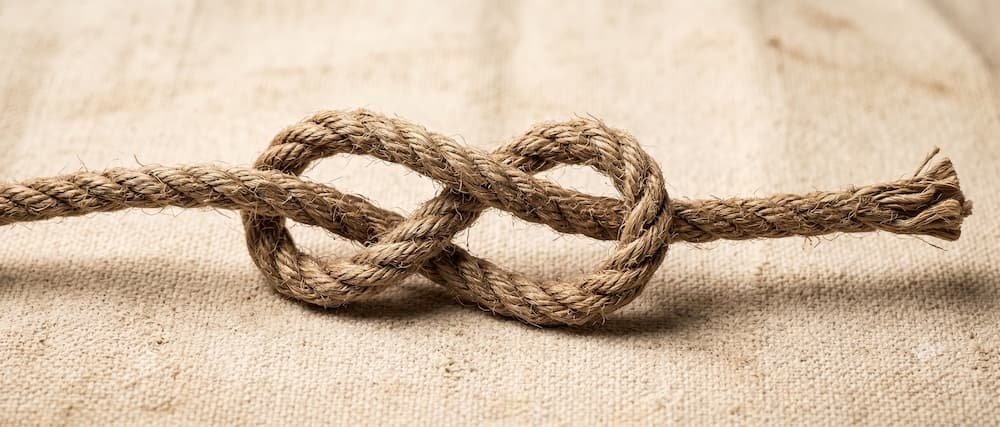
2. Figure-Eight Knot
Known as the king of stopper knots. It is one of the most reliable basic sailing knots due to its strength and versatility.
- Usage: Ideal for finishing a line to prevent it from sliding out of retention devices or pulleys.
- Advantage: Unlike the simple knot, the figure-eight remains easy to untie even after bearing heavy loads.
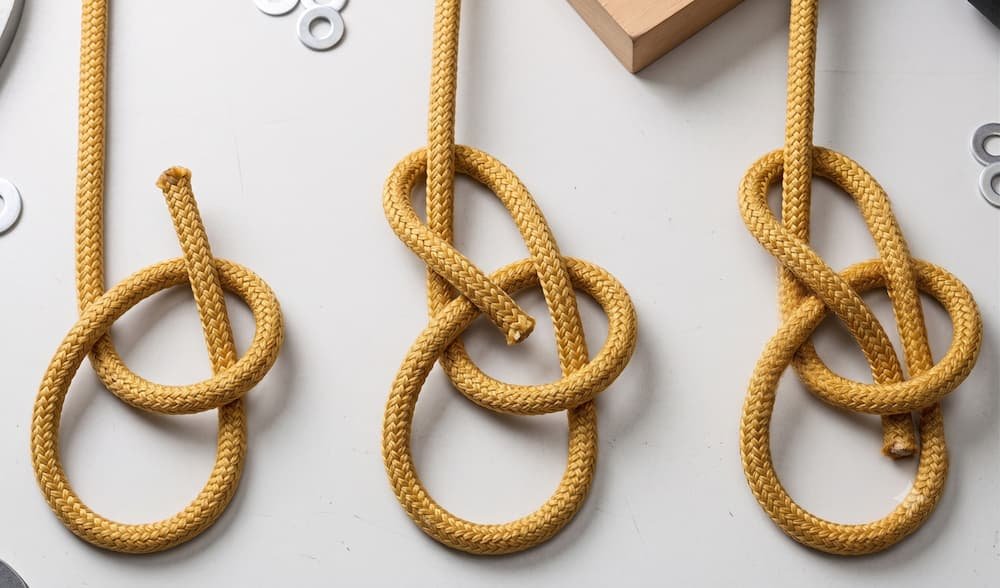
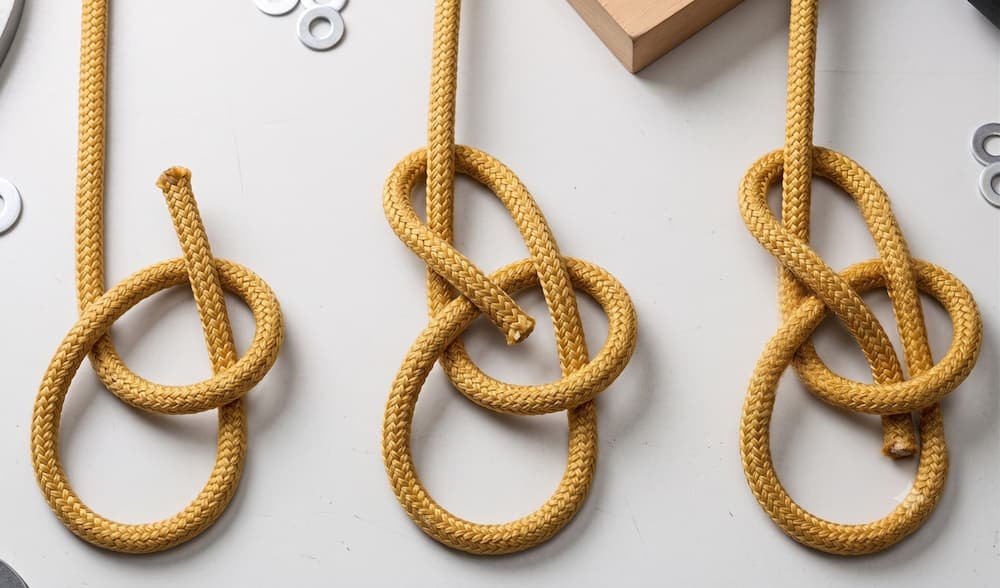
3. Bowline Knot
If we had to choose the king of all moorings, this would be it. It creates a fixed loop (a “gaza”) that will not slip or tighten.
- Usage: Vital for attaching halyards, sheeting sails, or rescue maneuvers (Man Overboard).
- Memory Trick: Sailors often use the story of a “rabbit coming out of the hole, going around the tree, and back into the hole” to teach this knot to beginners.
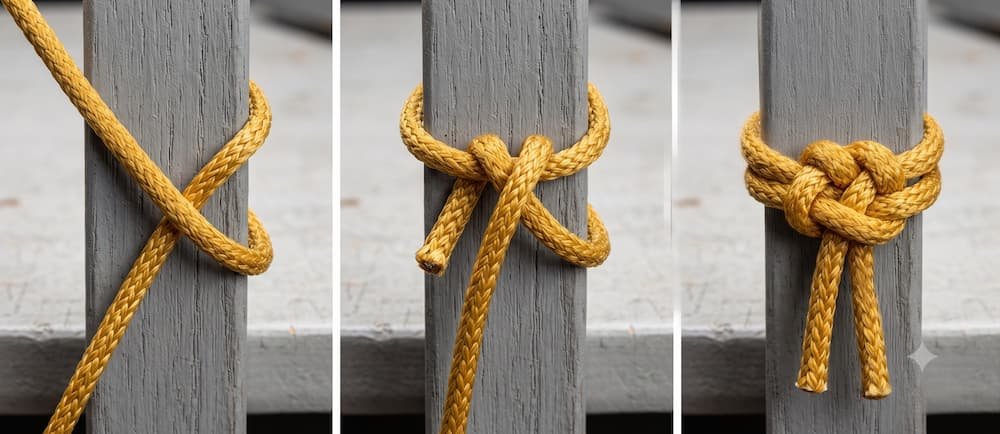
4. Clove Hitch
A fast and incredibly practical knot.
- Usage: It is employed almost exclusively to temporarily secure lines to masts, pilings, or rails.
- Warning: While excellent for its speed, it requires constant tension; if the line goes slack intermittently, the clove hitch may loosen.
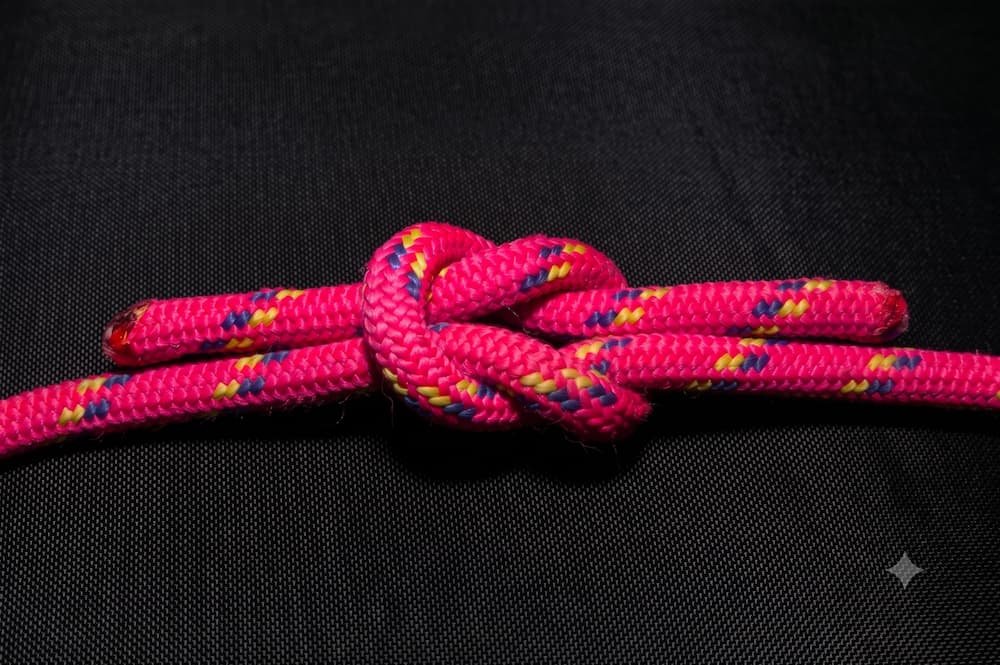
5. Reef Knot (Square Knot)
The nautical equivalent of tying your shoelaces. It consists of joining two simple knots.
- Usage: Used to join two ropes of the same “mena” (thickness) or to reduce sail surface area (reefing) during strong winds.
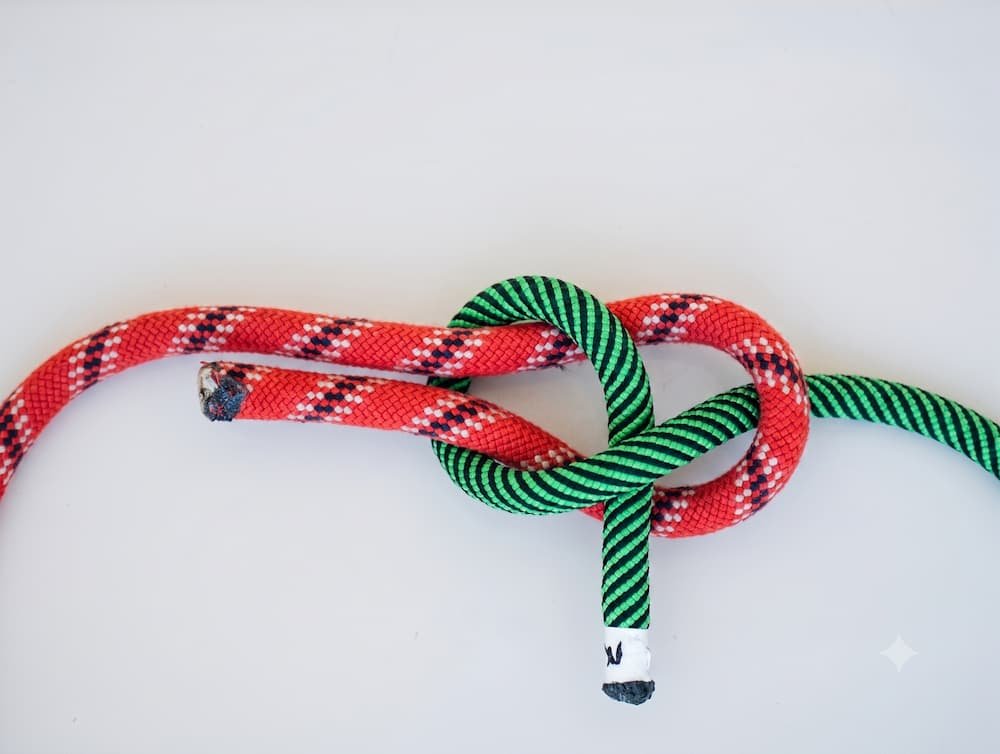
6. Sheet Bend
When the reef knot fails because you are dealing with ropes of different thicknesses, the sheet bend comes to the rescue.
- Usage: Used to join two lines of different diameters securely, ensuring they do not slip under pressure.
Download Our Sailing Knots PDF Guide
We know that at sea, you don’t always have a reliable internet connection, and memory can fail during a critical maneuver. That is why having physical notes is fundamental.
To help you practice at home or keep your notes on the boat, we have prepared a free downloadable document. In our sailing knots PDF (or nautical knots PDF), you will find step-by-step illustrations, visual memory tricks, and technical resistance sheets.
Master Your Knots at Puerto Sherry
Theory and PDFs are excellent foundations, but true seamanship is demonstrated with the breeze on your face and a line in your hand. If you want to take your skills to the next level, join us at the Puerto Sherry Nautical Club.
Whether you are looking to prepare for your professional sailing certification, initiate yourself in our light sailing courses, or perfect your navigation technique in the bay, we have the fleet and the expert instructors ready for you. Don’t just practice knots in your living room; come to our marina, cast off, and experience the complete thrill of mastering the sea.