04 Jun Puerto Sherry Leads a New Seabed Cleanup Event in the Bay of Cádiz
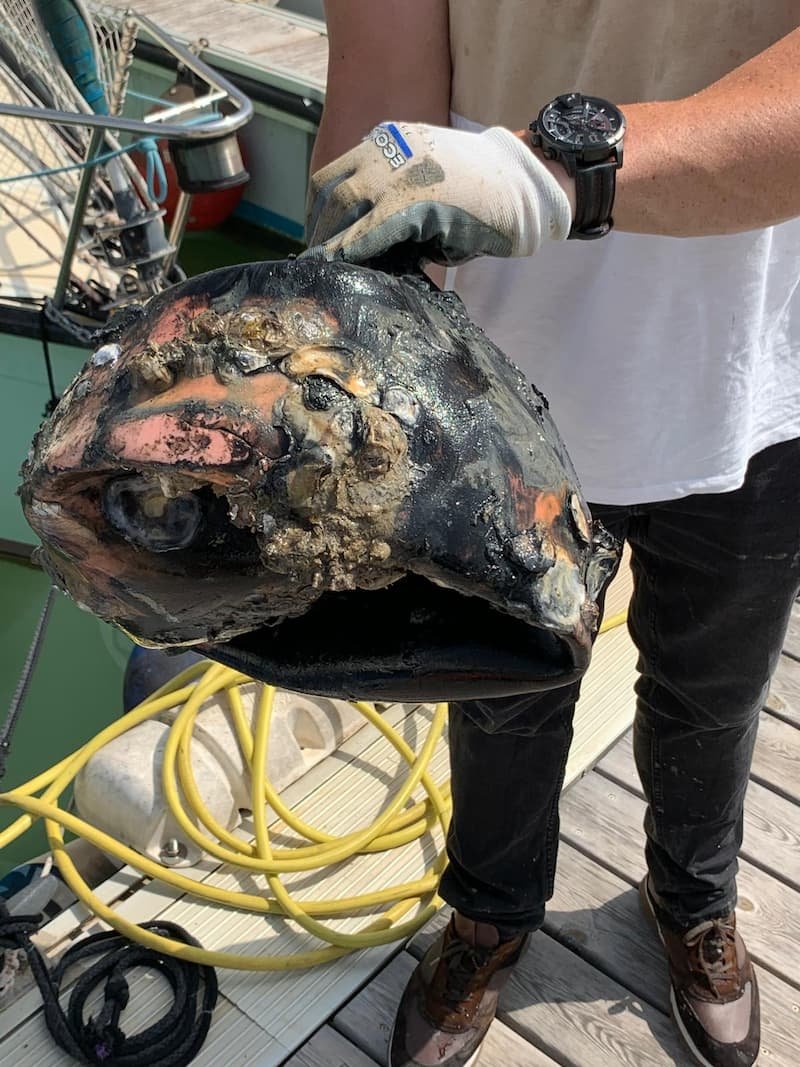
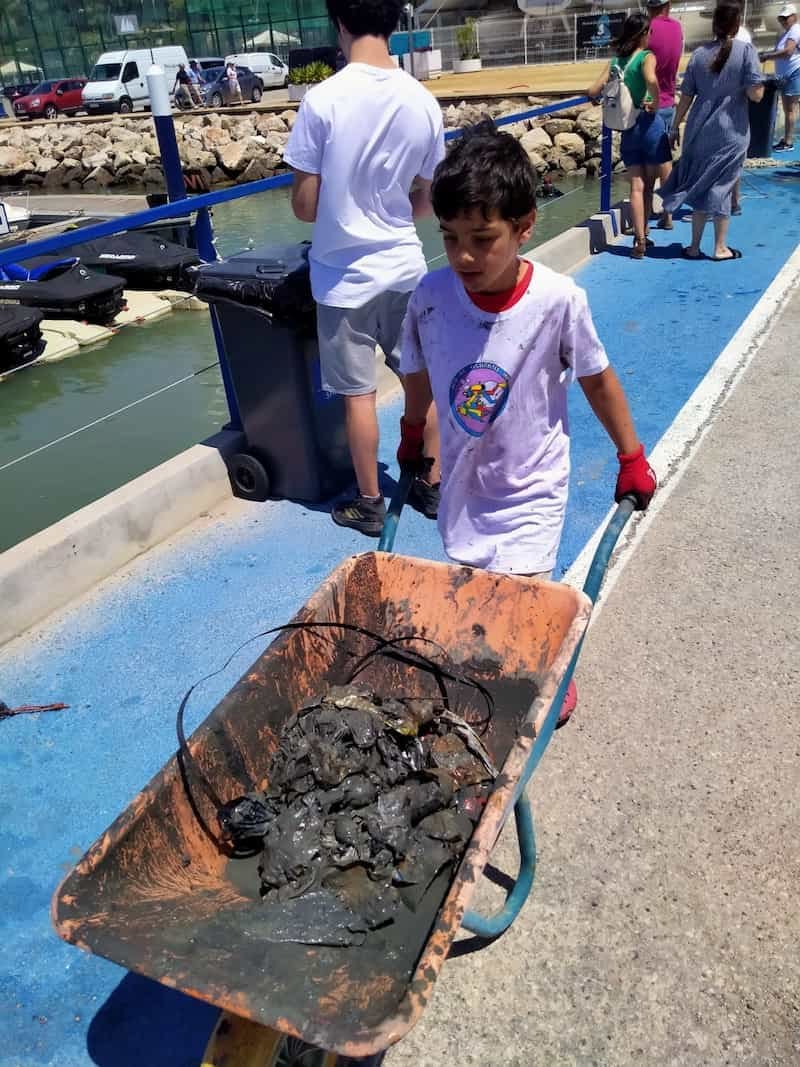
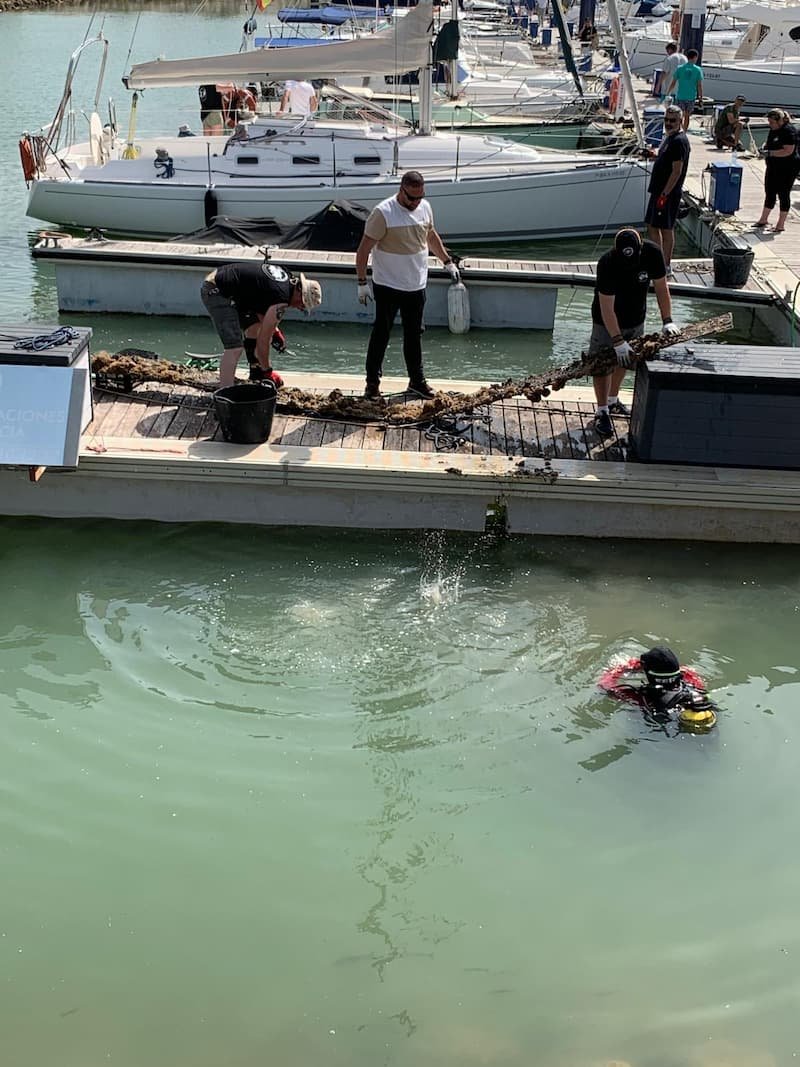
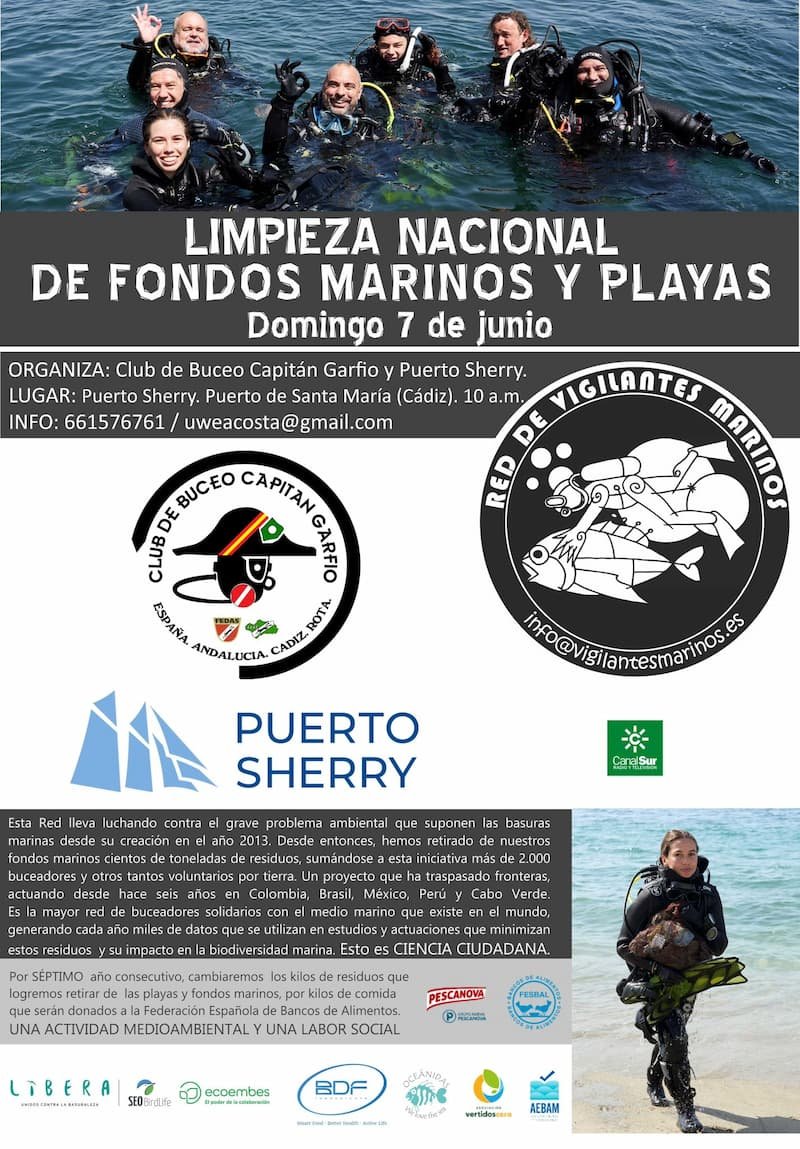
The marina of El Puerto de Santa María reaffirms its commitment to the preservation of the marine ecosystem by hosting, this Sunday, June 7th, starting at 10:00 a.m., a major underwater trash collection. This environmental action is carried out in close coordination with the Capitán Garfio Diving Club and is part of the great national mobilization promoted by the NGO Oceánidas through its Marine Watchers Network.
Three Years of Commitment to Coastal Sustainability
This call marks the third consecutive year that the Cádiz facilities have participated in the project, consolidating a port management strategy based on education, citizen collaboration, and direct care for the environment. The purpose is clear: to make the problem of underwater pollution visible and restore the health of our coastline.
A Historic Balance of Over 700 Kilos Removed
The sustained effort of volunteers and scuba divers has yielded great results in previous campaigns:
- 2024 Edition: A milestone was achieved with the extraction of 555 kilos of waste (from plastics to metals) accumulated at the bottom of the dock.
- 2025 Edition: The work focused on the breakwater and pontoon D, successfully removing more than 160 kilos of debris.
Strategic Alliances to Protect the Aquatic Ecosystem
For an initiative of this caliber to work, synergy between administrations, private companies, and sports entities is fundamental. Nicolás Figueras, General Director of Puerto Sherry, highlights that these types of actions reflect true sustainability: executing tangible improvements, weaving collaboration networks, and awakening collective awareness about the urgency of caring for our seas.
The Technical Role of PUSAMA and the Capitán Garfio Club
This year, the logistics take a leap in quality thanks to the sponsorship of PUSAMA, a local company specializing in waste management, which will provide a specific container to ensure the correct weighing, classification, and treatment of the extracted trash.
From the technical direction, Uwe Acosta Martín (president of the Capitán Garfio Diving Club and delegate of the Andalusian Federation of Underwater Activities) emphasizes that the strategy involves cleaning different quadrants of the port each year. Acosta points out a revealing fact about the evolution of environmental awareness: while years ago tires or batteries were pulled from the seabed, today “careless” items (such as boxes or tarps dragged by the wind) predominate, demonstrating that good practices are taking root in port facilities.
Institutional Support from the Local City Council
The local administration also supports this cause. Jesús Garay, head of Environment and Sustainable Development of El Puerto de Santa María, has applauded this public-private initiative. For the city council, this cleanup brings to light an invisible threat and is a clear example of the joint work necessary to build a city that respects its ecological heritage.
Citizen Science and Humanitarian Aid: "The Unseen Trash Also Counts"
The Puerto Sherry event is not an isolated incident. During this weekend, the campaign will be replicated in more than 30 aquatic spots throughout Spain (including other locations in Cádiz such as La Ballenera or El Palmar). Under the slogan “the unseen trash also counts”, the aim is to warn about the danger posed by submerged debris, which ends up degrading into microplastics and integrating into the food chain.
From Waste Cataloging to the Food Bank
This day goes beyond a simple cleanup to become an engine for research and solidarity:
Scientific Contribution: Each extracted kilo will be classified and uploaded to the MARNOBA application (from the Ministry for the Ecological Transition) to enrich the LIBERA Project, helping to investigate the origin and movement of marine litter.
Social Impact: Thanks to an alliance with Nueva Pescanova and FESBAL (Spanish Federation of Food Banks), the total weight of the waste recovered by the divers will be automatically translated into kilos of food for vulnerable families.
Circular Economy: As a final touch, the nets used by the divers to collect the debris are hand-woven by net-making women, who have reused fishing gear abandoned in the sea to give them a new useful life.