

08 Jun Orcas and sailing in the Atlantic: what to do if they approach your boat
Sailing along the Andalusian Atlantic coast offers some of the most spectacular experiences in southern Europe. However, in certain areas of the Gulf of Cádiz and the Strait of Gibraltar, it is possible to encounter a phenomenon that has generated considerable interest among sailors and maritime authorities in recent years: the interaction of groups of orcas with boats.
Although these encounters are rare compared to the total volume of shipping traffic, it is important to know how to respond in order to ensure the safety of those on board, minimise risks to the vessel and respect a protected species that forms part of the natural wealth of our coasts.
Un encuentro excepcional en nuestras aguas
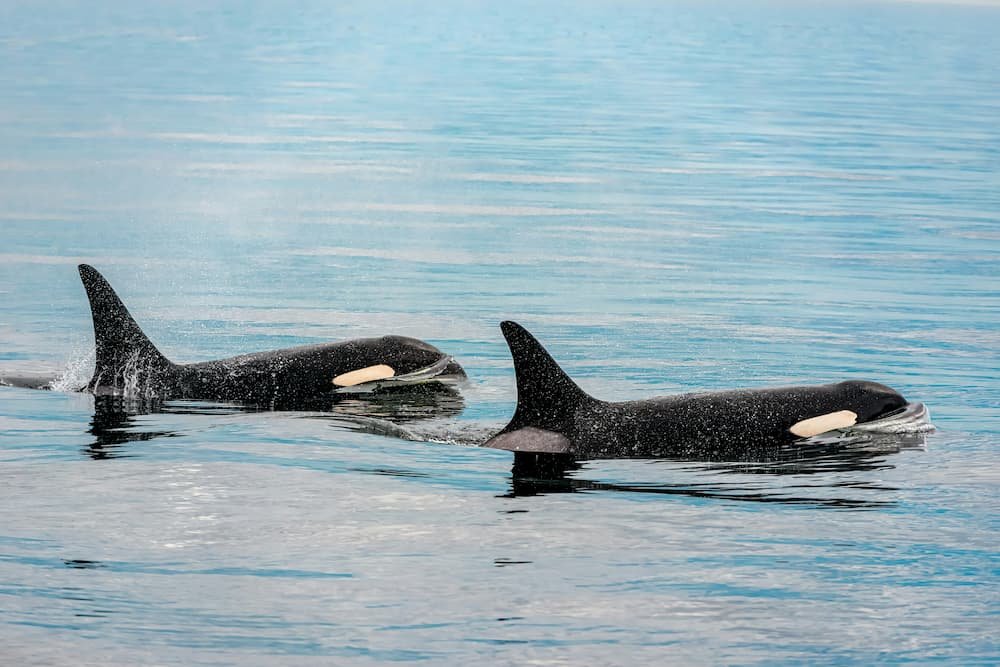
The Iberian orcas are a protected population that inhabits mainly the waters of the Gulf of Cádiz and the Strait of Gibraltar.
For many sailors, observing these animals in the wild can be a unique and unforgettable experience. However, on occasions, some groups have exhibited behaviour involving interaction with boats, particularly sailing boats.
In such situations, the main recommendation is to remain calm and follow the instructions issued by the maritime authorities.
What to do if an orca approaches your boat
If, whilst out at sea, you notice a pod of orcas interacting with your boat, the official advice is clear.
Stay clear of the boat's sides
One of the first pieces of advice is to avoid standing at the sides and to find a more central position inside the boat.
This reduces the risk of being knocked over or falling in the event of sudden movements caused by the interaction.
The safety of those on board must always be the priority.
If you're sailing, lower the sails
On sailing boats, the authorities recommend lowering the sails to avoid losing control or potential risks arising from sudden changes in manoeuvres.
Reducing the pressure on the boat allows the situation to be managed more safely whilst following the established protocol.
Always notify the Maritime Rescue Service
One of the most important steps is to report the incident to the Maritime Rescue Coordination Centre.
This recommendation should be followed regardless of whether or not the vessel has sustained damage.
The information provided by boaters enables:
- improved tracking of orca movements
- increased scientific understanding of their behaviour
- improved safety recommendations
- facilitation of assistance where necessary
Furthermore, Maritime Rescue can offer specific guidance depending on the situation and the vessel’s location.
Don’t disturb them or try to scare them away
Orcas are a protected species.
For this reason, no actions should be taken that could cause them harm, stress or disrupt their natural behaviour.
Official guidelines emphasise that the safety of the crew is a priority, but this must always be balanced with respect for marine wildlife.
Attempting to scare them away through aggressive manoeuvres, striking them or any other action may worsen the situation and also affect animals protected by current legislation.
The importance of documenting the meeting
Whenever circumstances allow and without compromising the safety of those on board, the authorities recommend capturing photographs or videos of the encounter.
This material can be extremely useful for:
- researchers
- scientific bodies
- maritime authorities
- cetacean monitoring
- programmes
Every sighting helps to improve our understanding of these behaviours and to develop measures that enhance the coexistence of shipping and marine conservation.
Sailing with the right information means sailing more safely
The best tool for dealing with any situation at sea is information.
Before undertaking voyages through areas where encounters with orcas have been reported, it is advisable to check the latest advisories and recommendations issued by the maritime authorities and the Maritime Rescue Service.
Planning your route, keeping yourself informed and being familiar with the protocols for action will allow you to enjoy your voyage with greater peace of mind.
Puerto Sherry and responsible sailing
At Puerto Sherry, we believe that safe sailing and the conservation of the marine environment must always go hand in hand.
The Bay of Cádiz and the Atlantic coastline form part of an extraordinary natural environment that we, as sailors and recreational marinas, have a responsibility to protect.
Knowing how to act when encountering cetaceans, following official recommendations and cooperating with the authorities contributes to safer and more sustainable sailing for everyone.
Because enjoying the sea also means learning to coexist with the species that inhabit it.
