

05 Nov Windward and Leeward: What They Are, Meaning, and Differences in Sailing
If you feel the call of the sea and regularly sail around the Bay of Cádiz, mastering nautical terminology is essential. Among all the sailing terms, two make the difference between a smooth voyage and a complicated one: windward and leeward.
At Marina Puerto Sherry, where the wind governs the daily life of our moorings and regattas, understanding the difference between windward and leeward is not just theory; it is the key to handling any vessel with safety and skill. Below, we unravel the meaning of leeward and windward, their key differences, and how to use them to your advantage.
What is Windward?
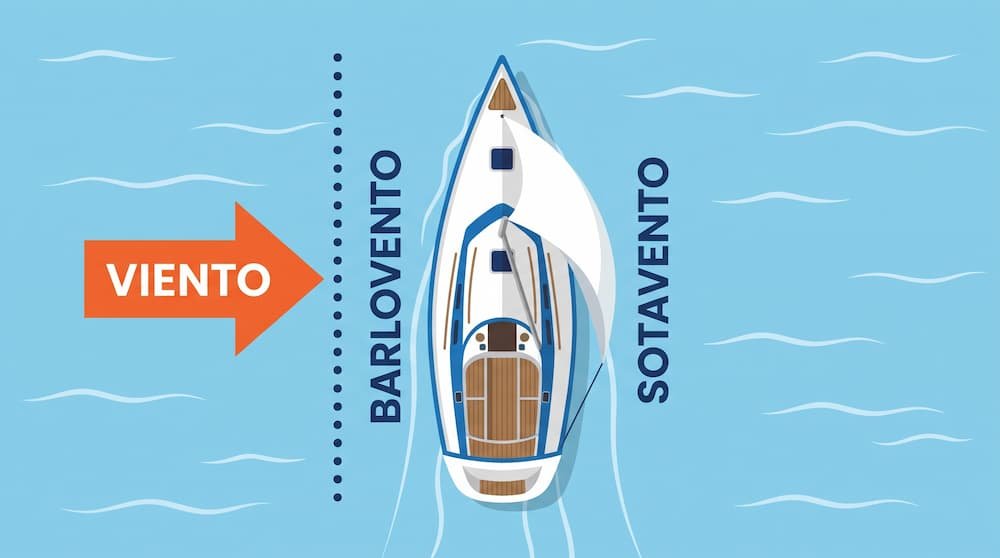
Imagine you are on the deck of your sailboat leaving our marina. If you turn until the breeze hits you directly in the face, you are looking to windward. It is that simple: windward is the direction from which the wind is blowing. It is the side of your boat, an island, or the coast that takes the direct impact of the airflow.
When sailing, going “upwind” or heading to windward means moving against the direction of the wind (known as beating or sailing close-hauled). This area has specific characteristics every sailor must know:
- Higher pressure and strength: By directly colliding with the air mass, the wind on the windward side is stronger, more constant, and predictable.
- Rougher seas: Constant wind over the water generates waves. The windward side will always be more exposed to choppy or rough seas.
- Tactical advantage (Regattas): The boat that dominates the windward position receives “clean air” and casts a wind shadow over its rivals, robbing them of speed.
What is Leeward?
If you are looking for the meaning of leeward, think of shelter. It is the complementary opposite of windward. Leeward is the direction toward which the wind is blowing after it has hit an obstacle. If you turn your back to the wind, you are facing leeward.
It is the aerodynamic “shadow” zone, and its characteristics are vital for safety:
- Lower pressure: The wind to leeward is weaker, but as it flows around obstacles (like mountains or sails), it can become gusty and turbulent.
- Calmer waters: It is the ideal place to anchor. The leeward side of a cape or island offers shelter from the waves.
- Right of way: Although being to leeward in a regatta is a tactical disadvantage, the International Regulations for Preventing Collisions at Sea (COLREGs) state that a windward vessel must give way to a leeward vessel, as the latter has less maneuverability.
When docking at a marina, knowing both zones is crucial. It is always preferable to approach the dock receiving the wind on the bow (windward) to use it as a brake, rather than receiving it on the stern (leeward), which would dangerously accelerate the boat.
The Crucial Role in Advanced Maneuvers: Anchoring
Understanding where the air comes from is not just for sailing in a straight line. In advanced sailing maneuvers, such as heaving to or anchoring safely, mastering windward is essential.
To execute a perfect anchoring maneuver, the skipper must luff up and head into the wind; that is, point the bow directly to windward. By doing this, the boat loses its headway (speed) naturally and in a controlled manner. It is at that precise moment, with the mainsail luffing so it doesn’t catch wind, that the anchor should be dropped, allowing the boat to drift smoothly to leeward to pay out the necessary rode or chain.
A Bit of History: The Windward and Leeward Islands in the Caribbean
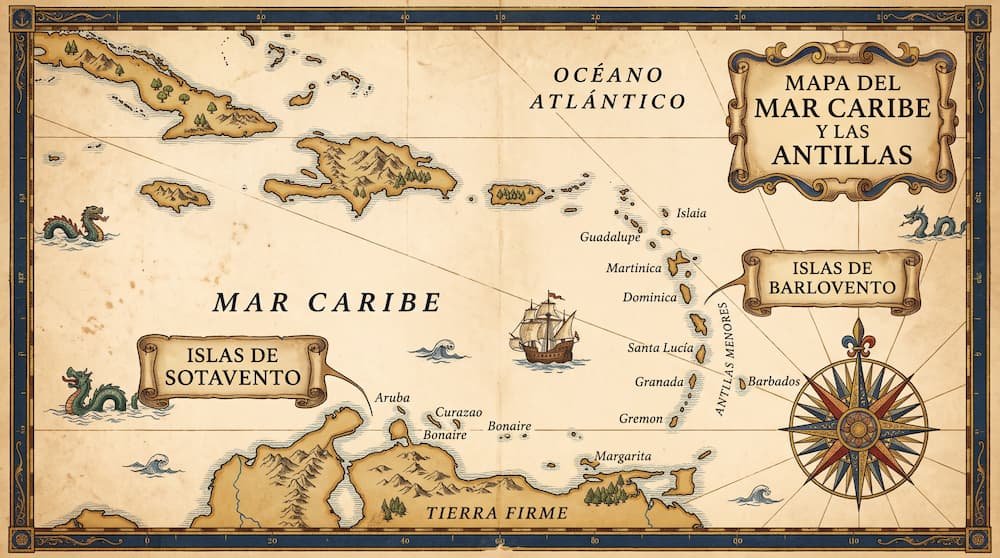
The influence of these nautical terms is so vast that it has shaped world maps. If you look at the map of the Lesser Antilles in the Caribbean, you will see they are divided into two main groups: the Windward Islands and the Leeward Islands.
This naming is not a coincidence; it responds to the islands’ position relative to the prevailing trade winds and the route taken by ships arriving from Europe in the 15th century.
- Windward Islands: Being located “on the side of the wind” (facing the trade winds crossing the Atlantic), they were the first to be discovered by Christopher Columbus in 1493.
- Leeward Islands: Located “below” the dominant wind currents, they were sheltered and explored slightly later, in 1499. Today, islands like Aruba, Bonaire, and Curaçao are famous for remaining outside the main hurricane belt thanks to their protected leeward position.
Key Differences Between Windward and Leeward
To quickly resolve any doubts about the difference between windward and leeward, we have created this comparison table summarizing their fundamental differences:
| Characteristic | Windward | Leeward |
| Definition | Side FROM which the wind blows. | Side TOWARD which the wind goes. |
| Wind Strength | Stronger and more constant. | Weaker and gusty/turbulent. |
| Sea State | Generally rougher, with waves. | Generally calmer, protected waters. |
| Sailing | Sailing “against” the wind (beating). | Sailing “with” the wind (running). |
| Right of Way (COLREGs) | Gives way to the leeward vessel. | Has the right of way (stand-on vessel). |
| Main Use | Harnessing maximum wind power. | Seeking shelter and safe anchoring. |
The Foehn Effect: When Mountains Transform the Wind
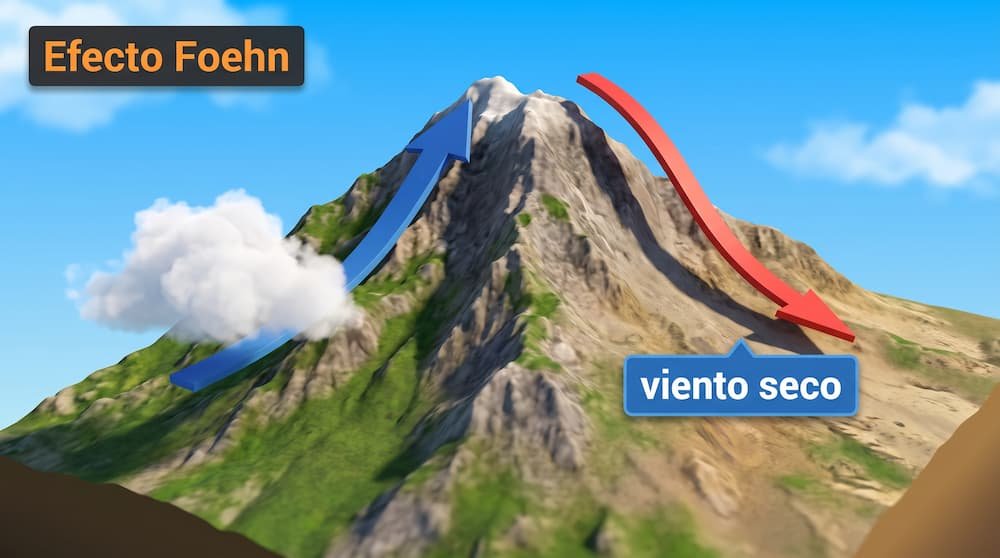
Beyond the sea, the concepts of windward and leeward explain meteorological phenomena such as the Foehn effect. This phenomenon occurs when a moist air mass ascends a mountain range.
On the windward slope, the air rises, cools, condenses, and generates orographic rainfall. Once it crosses the peak, it descends the leeward slope, compressing and warming rapidly, resulting in a very dry, warm, and gusty wind. For a sailor, anticipating this descending wind when sailing to leeward of high mountainous areas is crucial to avoid violent surprises.
Frequently Asked Questions
Stand on deck: the side where the wind hits your face is windward. The direction your back is pointing toward is leeward.
The term “lee” comes from the Old English word hleo, which means “shelter” or “defense.” Therefore, “leeward” literally refers to the sheltered side, away from the wind’s force.
The direct antonym of windward is leeward. While windward is the exposed side from where the wind blows, leeward is the hidden side toward which it goes.
The term “windward” simply combines the word “wind” with the directional suffix “-ward” (meaning “in the direction of”). So it literally means facing into the direction of the wind. (In Spanish, barlovento comes from the Old French par le vent, meaning “by the wind”).
According to nautical regulations (COLREGs), when two sailboats have the wind on the same side, the vessel sailing to windward must keep clear and give way to the vessel sailing to leeward.