

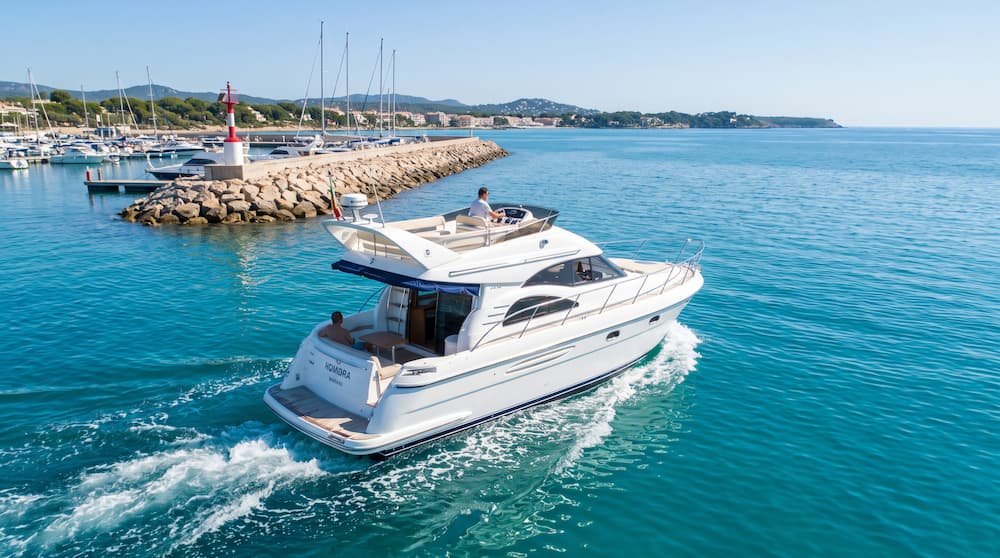
12 Nov Port and Starboard: What They Are, Meaning, and Differences on a Boat
Understanding nautical terminology is not just a curiosity for sea lovers; it is an essential safety requirement. From the skipper of a vessel directing their crew to an amateur heading out to enjoy a cruise around the Bay of Cádiz, knowing exactly what port and starboard are prevents confusion that, at sea, can have serious consequences.
At Marina Puerto Sherry, we want you to feel as comfortable with nautical language as you do on dry land. Therefore, in this guide, we will demystify the sides of a boat once and for all, review their origins, and give you the best tricks so you never again have to wonder if starboard is right or left.
What are Port and Starboard? (The Sides of a Boat)
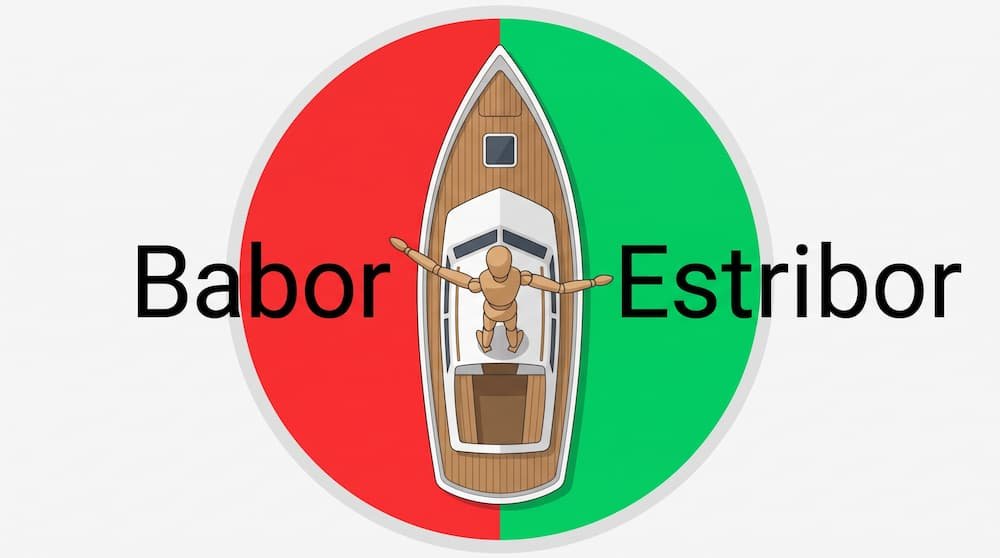
Let’s start with the fundamental definition that will serve as your anchor. Imagine you are aboard a boat, standing on the deck, and facing forward (towards the bow). In that exact position:
- Port is everything to your left side.
- Starboard is everything to your right side.
Why don’t sailors just use “left” and “right”? Because port and starboard are absolute, structural references. They do not change. If you are at the bow looking towards the stern (the back of the boat), your personal left will be the starboard side, and your personal right will be the port side. Using the correct terms eliminates any ambiguity in orders and maneuvers. They are the immutable cardinal points of any vessel.
So, is Starboard Right or Left?
Let’s engrave this in our minds, because it is the most frequent doubt. The answer is categorical:
Starboard is always the right side of the boat when facing the bow. By elimination, port is always the left side of the boat when facing the bow.
There are no exceptions. It doesn’t matter if it’s a small sailboat or a mega-yacht moored in our marina. The rule is universal. To visualize it better, think of a boat’s hull as a human body facing forward: its right hand is starboard, and its left hand is port.
Historical Origin of Port and Starboard
To understand the origin of these words, we have to travel back to the time of the Vikings. Their ships (the famous longships) did not have a central rudder at the stern, but rather a large steering oar that was always placed on the right side. In Old Norse, “steering side” was said stýri borð, which evolved into the English word starboard.
Because the steering oar was on the right, ships always docked at the pier on the opposite side (the left) so as not to damage the oar. This was the loading side, originally called larboard. However, during a storm, larboard and starboard sounded dangerously similar when shouted. Therefore, the British Navy officially replaced larboard with port, as it was the side facing the port (dock).
Foolproof Tricks to Tell Port from Starboard
In the heat of a maneuver, there is no time to hesitate. Here are the best mnemonic tricks used by English-speaking sailors:
- The 4-Letter Rule: The word “Port” has four letters. The word “Left” also has four letters. Therefore, Port = Left.
- The Length Rule: “Starboard” is a longer word, just like “Right” is a longer word than “Left”.
- The Color Code (Navigation Lights): Internationally, boats carry nighttime position lights:
- Port = Red Light
- Starboard = Green Light
- Trick: Just remember that “Port wine is Red.” Therefore, the port side is the red light side.
Right of Way Rules: Who Goes First?
The International Regulations for Preventing Collisions at Sea (COLREGs) are the law of the sea. When two power-driven vessels cross paths:
The COLREGs state that you must give way to the vessel you see on your starboard (right) side.
- If you look to your right (starboard) and see a crossing boat, you will see its RED light (its port side). Red indicates “Danger / Give Way”. You must maneuver.
- If you look to your left (port) and see a boat, you will see its GREEN light (its starboard side). Green indicates “Clear to Go”. You have the right of way (though you must always maintain caution).
Knowing how to distinguish the sides can literally save lives at sea.
Frequently Asked Questions (FAQ)
They derive from the configuration of ancient Viking ships. “Starboard” comes from the Old Norse stýri borð (steering side, which was on the right). “Port” became the official term because ships docked with their left side facing the port to avoid damaging the steering oar.
The four cardinal sides of a vessel are: Bow (front), Stern (back), Port (left side looking towards the bow), and Starboard (right side looking towards the bow).
Stand on the boat looking forward (towards the bow). Your left arm points to port and your right arm points to starboard. At night, look for the red light (port) or green light (starboard).
For power-driven vessels crossing, the boat that appears on your starboard (your right) has the right of way. For sailboats under sail, the one with the wind on its starboard side (starboard tack) has the right of way over the one on a port tack.
Thanks to Archimedes’ Principle. Even if a boat is made of heavy steel, its hull encloses a large amount of air. This makes its overall density lower than that of the water, generating an upward buoyant force equal to the weight of the displaced water volume.
These terms come from nautical traditions. “Bow” likely derives from the Old Norse word bógr (shoulder of an animal or ship’s bow), while “stern” comes from the Old Norse stjórn, meaning steering (as steering originally took place at the back of the ship).