

19 Nov What is a Sailboat: How It Works, Parts, and Types of Sailing Boats
When we talk about navigation in the Bay of Cádiz, sailboats hold a very special place in the hearts of sea lovers. These vessels, driven by the force of nature, are synonymous with freedom and adventure.
If you have ever strolled along our pontoons at Marina Puerto Sherry and asked yourself “what exactly is a sailboat?” or “how does a sailboat work?”, you have come to the right place. In this comprehensive guide, we will explain its parts, how it manages to sail against the wind, and what options exist to get you started in this fascinating world. Let’s set sail!
What Exactly is a Sailboat?
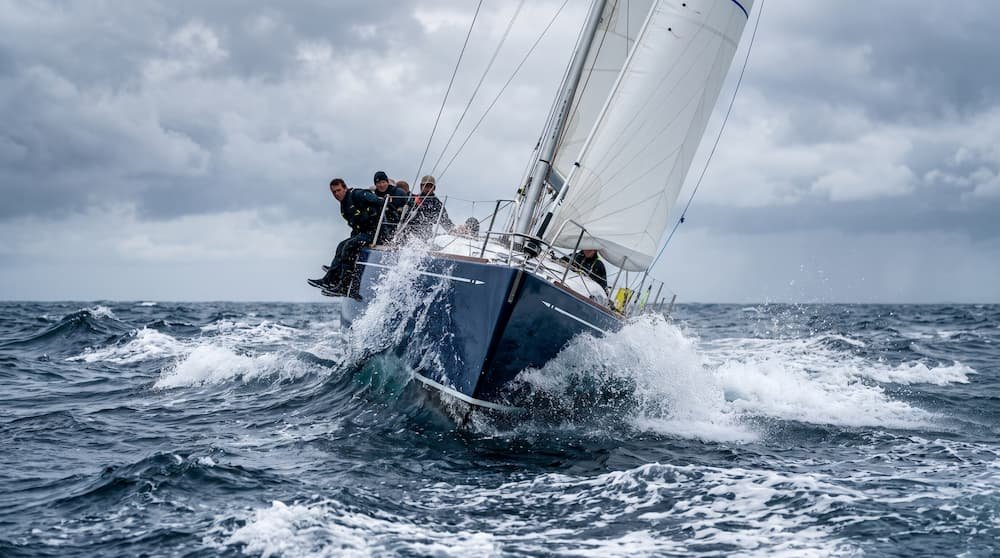
A sailboat (or sailing boat) is a vessel that moves primarily thanks to the force of the wind pushing its sails. Although today the vast majority of cruising sailboats have an auxiliary motor for maneuvering in port or for calm days, their essence and design are meant for sailing silently and ecologically by harnessing air currents.
Historically, the sailboat was the engine of global trade, exploration, and fishing. Today, its use is mostly sporting and recreational. From a small sailing dinghy designed for a single crew member to an impressive luxury sailing yacht for ocean crossings, they all share the same physical principles.
Parts of a Sailboat You Should Know
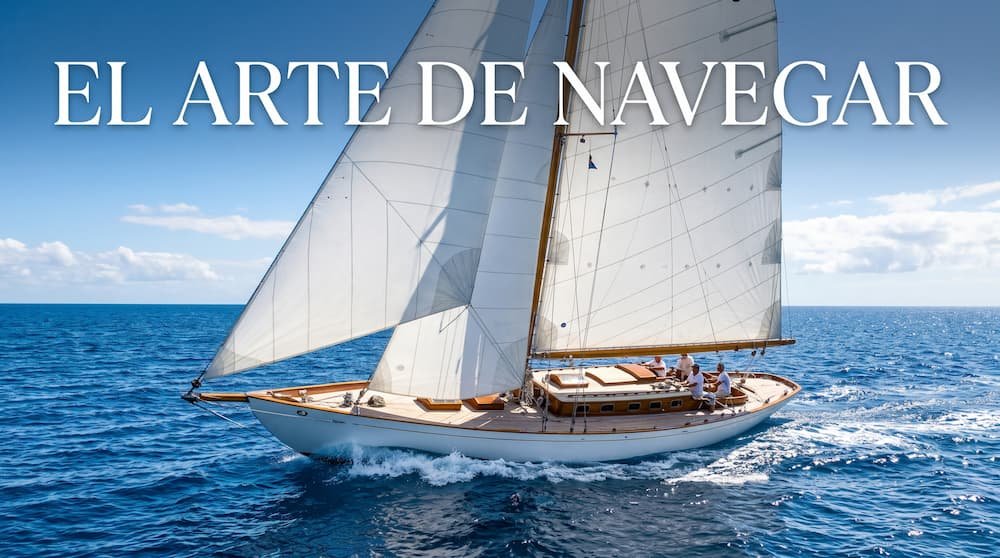
To understand how it works, you must first know the parts of a sailboat. These are the fundamental elements that differentiate a sailboat from a motorboat:
- Hull: The body of the boat that floats in the water.
- Mast: The large vertical “pole” that supports the sails.
- Boom: The horizontal pole attached to the mast that holds the bottom of the main sail.
- Sails: The “engines” of the boat. The most common are the mainsail and the jib or genoa (the forward sail).
- Keel (or Centerboard): A heavy piece under the hull that provides stability, prevents the boat from capsizing, and counteracts the lateral force of the wind.
- Rudder: The submerged blade at the stern that allows steering.
- Rigging: The system of wires and ropes that support the mast (standing rigging) and allow the sails to be controlled (running rigging).
How Does a Sailboat Work? The Physics of the Wind
The functioning of a boat’s sails combines physics and aerodynamics. When the wind blows, it doesn’t just “push” the sail from behind. In reality, a sail works exactly like an airplane wing placed vertically.
This is where Bernoulli’s principle comes into play: the wind passing over the convex side of the sail (leeward) accelerates, creating a low-pressure zone. The wind on the concave side (windward) moves slower, creating high pressure. This pressure difference “sucks” or pulls the sailboat forward.
Together with Newton’s Law of Action and Reaction and the fundamental role of the keel (which prevents the boat from slipping sideways on the water), the boat transforms wind energy into forward motion.
How Does a Sailboat Sail Against the Wind? (Tacking)
One of the great marvels of sailing is seeing a boat move towards the direction the wind is coming from. How is this possible?
A sailboat can never sail directly into the wind (that area is called the “no-go zone”). However, it can sail in a zigzag pattern. This technique is known as beating or tacking upwind. The skipper adjusts the sails almost parallel to the hull and points the bow at about 45 degrees to the wind direction. By turning from one side to the other (tacking), the sailboat gains ground towards its destination against the wind.
Types of Sailboats: From Dinghies to High Competition
The world of sailboats is immense. Depending on their size and purpose, we can divide them into several categories, very present in any regatta club:
- Dinghy Sailing: These are small boats, without a fixed keel (they use a retractable centerboard) or cabin. They are ideal for learning. Highlights include the Optimist (the quintessential small sailboat for children) and the Laser.
- One-Design Sailboats (Regattas): Designed for speed and competition, such as the famous J80, one of the most popular racing boat classes in the Bay of Cádiz.
- Cruising Sailboats: Vessels with a cabin, galley, and berths designed for living on board. A 12-meter (40-foot) or 15-meter sailboat are very common sizes for long voyages and holidays.
The Largest Sailing Yacht in the World
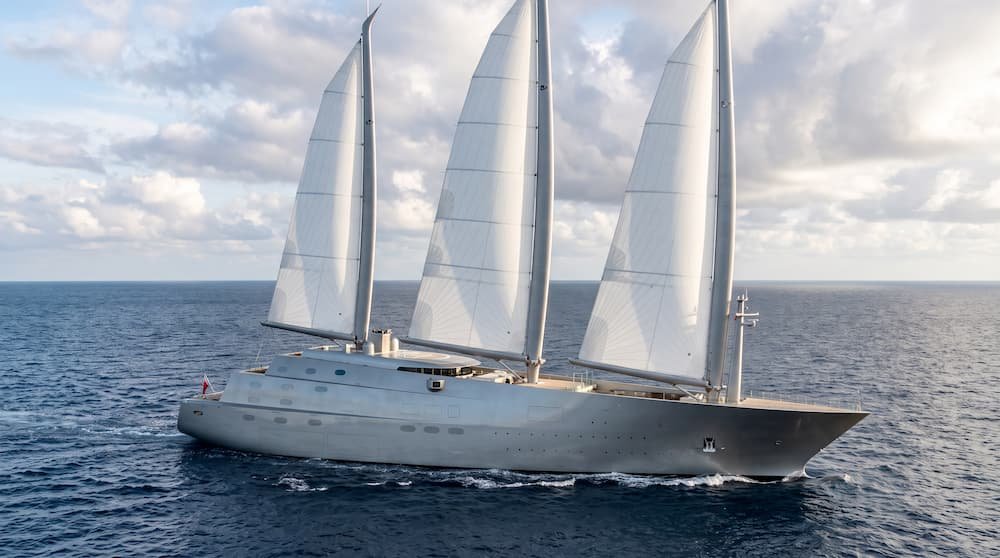
If we talk about records, we cannot ignore the “Sailing Yacht A”. At an impressive 143 meters (469 feet) in length, it is the largest luxury sailing yacht ever built.
Designed by Philippe Starck, this mega-yacht combines a futuristic hull with fully automated carbon fiber sails. Although its engines are powerful, its impressive rig allows it to sail driven by the wind, representing the pinnacle of modern naval engineering.
Which Sailboat to Buy or Rent to Start?
If you have fallen in love with the sea, taking the plunge is not that difficult. For absolute beginners, the best option is always to go through a sailing school and try an Optimist sailboat (if you are a child) or a Laser class (if you are an adult).
If you already have a license and want to enjoy it with the family, renting a sailboat is the logical step before buying. An 8-meter sailboat (about 26 feet) is an excellent size, very manageable and fun.
If you decide to buy, the second-hand sailboat market is huge. You can find everything from a small used sailboat ideal for day trips to fully equipped 12-meter used sailboats ready to cross the Mediterranean. Always remember to budget not only for the purchase price but also for mooring in a safe marina like Puerto Sherry, regular rigging maintenance, and hull antifouling.
Frequently Asked Questions (FAQ)
A small recreational sailboat usually sails between 5 and 8 knots (9-15 km/h). Racing boats and high-competition yachts can easily exceed 20 or 30 knots (over 50 km/h) by planing over the water.
In general terms, both are driven by sails. “Sailboat” is the universal term for any wind-powered vessel. “Sailing yacht” is typically used to describe larger, more luxurious sailboats equipped with cabins and amenities for cruising and living aboard.
It is a type of sailing done in small boats without a cabin or fixed keel (they use a centerboard). Classic examples are the Optimist, the Laser, or the 420. If they capsize, the crew itself can right them.
A sailboat uses the force of the wind on its sails as its main propulsion system, requiring aerodynamic and meteorological knowledge. A motorboat depends exclusively on fuel-powered mechanical engines.
In Spain, for sailboats up to 6 meters in length sailing during the day and close to the coast, no license is required. For larger sailboats, progressive licenses are needed: PNB (up to 8 meters), PER (up to 15 meters), Yacht Skipper, and Yacht Captain, all of which require mandatory sailing practicals.